
You look up at a clear blue sky and notice tiny specks drifting across your line of sight. You blink a few times, but those little shapes keep floating right in front of you. Our team at Downtown Eye Care & The Contact Lens Department can help you understand this common experience and what it means for your vision.
Eye floaters are usually harmless, and though they don’t go away completely, your brain does usually learn to ignore them over time. The fluid inside your eye can change naturally over time, which can create small shadows on the back of your eye. If you see a rapid increase in floaters, flashes of light, or a dark, curtain-like shadow over your sight, you should seek eye care immediately.
What Eye Floaters Look Like and Their Origins
Common Shapes You Might See
You might notice different types of shadows drifting through your field of view. These visual disruptions often become more obvious when you stare at a plain background like a white wall or a computer screen.
Floaters look different for everyone, but common ways that they show up are:
- Squiggly lines or dark spots in your vision
- Threadlike strands drifting across your sight
- Small shadowy shapes against bright backgrounds
Main Reasons for Floaters
The inside of your eye contains a gel substance called the vitreous. Naturally, this gel can shrink and become more liquid over time, causing small protein fibres to clump together. These tiny clumps can cast shadows on the back of your eye, causing you to see those spots.
This liquefaction and clumping is typically associated with aging, but it can also be linked to a number of retinal and vitreous degenerative processes that produce floaters. These floaters may arise from inflammation within the eye, retinal bleeding or fluid accumulation, retinal tears, rapid axial elongation commonly seen in nearsighted eyes, or delayed changes following ocular trauma or surgery.
Although most floaters are benign, they can sometimes be associated with retinal tears, vitreous hemorrhages, diabetic or macular disease, and uveitis. From the patient’s perspective, many of these floaters may appear similar. The best way to determine whether new floaters are benign or potentially concerning is to have a dilated fundus assessment performed by an eye doctor.
Normal Age to Notice Floaters
Typical Timeline for Eye Changes
You can experience visual shadows at almost any stage of life. However, these changes happen much more frequently as you get older. For that reason, many people begin to notice more spots after age 50.
The Truth About Floaters and Your Vision
How Your Brain Adapts Over Time
The dark specks in your vision are tiny proteins stuck together, trapped inside your eye fluid, and they usually remain inside the eye once they form. Fortunately, these shapes often stop bothering you after a few months because your mind will filter them out.

When to Visit an Eye Doctor
Key Signs to Watch For
Most drifting shapes are harmless and don’t require immediate attention. But sometimes new visual disruptions can point to a torn retina or other sudden eye problems. If you notice any of the following symptoms, it’s a good idea to seek prompt emergency eye care from an eye doctor in Ottawa:
- Sudden increase in the number of new floaters
- Flashes of light along with new dark spots
- A shadow or dark curtain over your sight
- A persistent decline in vision
- A floater that follows the line of sight
- A painful response to light that persists and/or worsen over a number days (5-7 days)
- A history of being myopic (nearsighted), a recent history of eye surgery, a previous retinal tears or uveitis flare up, diagnosed with macular degeneration, diabetes, elevated blood pressure or cholesterol
The Role of Routine Eye Care
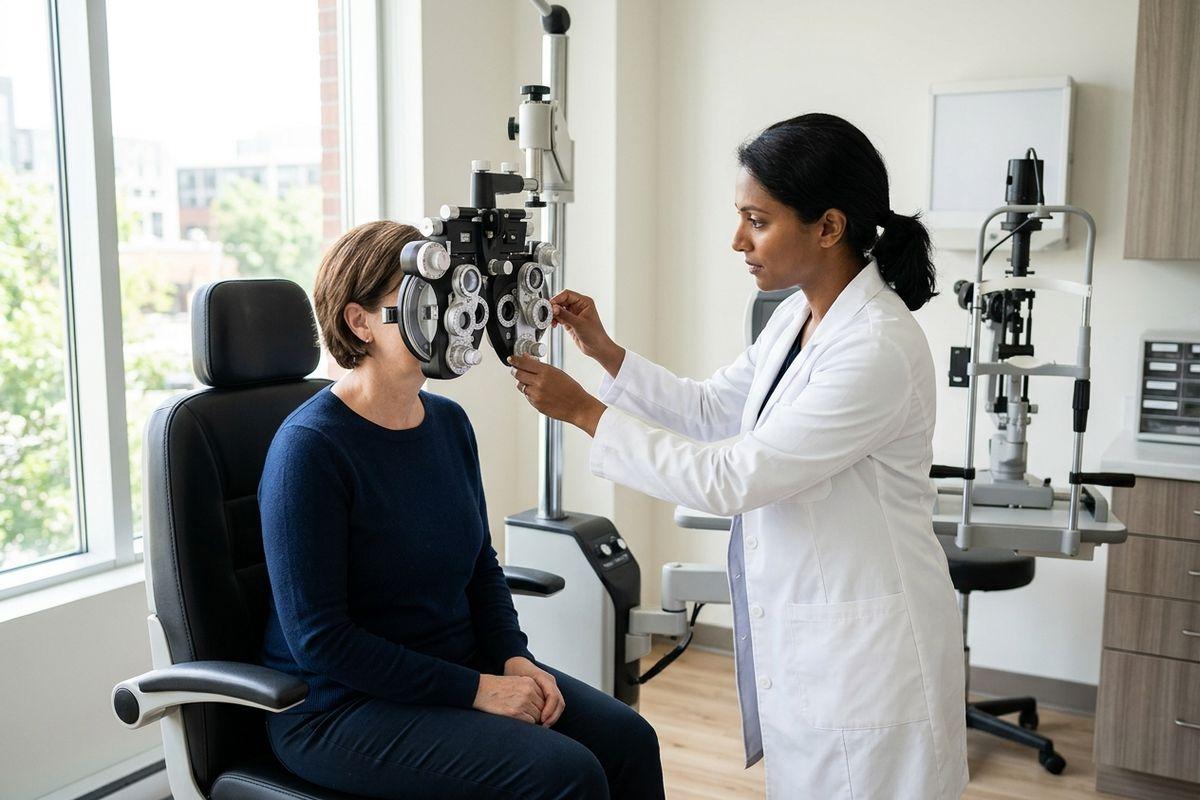
Consistent eye exams help your eye doctor provide you with a clear picture of your overall eye health. Our team can use specialized tools to look deep into the back of your eye, helping us identify early signs of trouble before you even notice vision changes.
Treatment Options for Severe Floater Symptoms
Professional Care for Your Eyes
For most people, our team recommends leaving standard floaters alone. That being said, if the spots are becoming significant or start to block your sight, our eye doctor can discuss ways to help you regain clarity.
Book Your Next Eye Exam
You deserve clear and comfortable vision at every stage of life. At Downtown Eye Care & The Contact Lens Department, we want to help you manage visual changes and maintain healthy, comfortable eyesight for years to come. If you’re curious about eye floaters or are just looking for an eye exam, schedule your next appointment today.