
If you find that street signs or the whiteboard in a classroom look blurry, but a book in your hands is clear, you may have myopia. Also known as nearsightedness, myopia is a common vision condition that affects how you see distant objects. Our team at Downtown Eye Care & The Contact Lens Department helps families in Ottawa address these vision challenges.
Glasses that correct myopia are prescription lenses designed to improve distance vision by helping light focus properly on the retina. Prescription eyewear can also be used to correct hyperopia (farsightedness), astigmatism (an irregularly shaped cornea or lens), presbyopia (the age-related loss of near focusing ability), and binocular vision disorders, which may require prism to improve eye alignment and visual comfort.
Available in a wide variety of frame styles and lens designs, myopia-correcting glasses adjust how light enters the eye, allowing you to see distant objects more clearly and comfortably.
How Do Myopia Eyeglasses Correct Vision?
Myopia happens when your eye’s shape causes light to focus in front of your retina instead of directly on it. This makes distant objects appear out of focus. Myopia eyeglasses use a concave lens that changes the path of light entering your eye.
This small adjustment moves the focal point back onto your retina. The result is sharper, clearer distance vision, allowing you to see objects across the room or down the street without straining.
Signs You Might Need Glasses for Myopia
Vision changes can be gradual, so it helps to know what to look for. A visit to an eye doctor in Ottawa for a comprehensive eye exam is the way to know for sure, but some common signs include:
- Distant objects seem blurry or fuzzy
- You frequently squint to see things far away
- You get headaches from eye strain
- You have difficulty seeing while driving, especially at night
Types of Spectacle Lenses for Myopia
When you get glasses for myopia, you have a few choices for lenses. The right option for you depends on your prescription and lifestyle.
Single Vision Lenses
These are standard lenses for myopia. The entire lens contains one prescription power to correct your distance vision, making it a straightforward and effective option.
High-Index Lenses
If you have a stronger prescription, your lenses can be thicker. High-index lenses are made from a material that bends light more efficiently, so they can be made much thinner and lighter for greater comfort.
Lens Coatings and Tints
You can add coatings to your lenses for extra benefits. Popular options include anti-reflective coatings to reduce glare from screens and headlights—which can help with digital eye strain—and scratch-resistant coatings for durability. You might also consider prescription sunglasses to protect your eyes outdoors.
What Is Myopia Management?
While myopia eyeglasses help correct blurry distance vision, they do not typically slow the progression of myopia. Myopia management involves treatments designed to help reduce the rate at which nearsightedness worsens, particularly during childhood and adolescence.
Myopia Control Treatment Options
Myopia Control Glasses
Specialized myopia control eyeglass lenses can help slow the progression of myopia while providing clear vision for everyday activities. Different lens options are available, including MiYOSMART, Stellest and ZEISS MyoVision Pro lenses. Unlike traditional single-vision glasses that only correct blurry distance vision, these lenses are designed to create peripheral myopic defocus, which may help slow excessive eye growth associated with worsening myopia. During a myopia management consultation, your optometrist can recommend the most appropriate lens option based on your child’s age, prescription, lifestyle, and visual needs.
Soft Contact Lenses
Options such as MiSight 1 Day and Abiliti soft contact lenses are designed to help manage myopia progression while correcting vision.
Orthokeratology (Ortho-K)
Ortho-K uses specially designed contact lenses worn overnight to temporarily reshape the cornea, allowing for clear daytime vision without glasses or contact lenses.
Low-Dose Atropine Eye Drops
Low-dose atropine eye drops may help slow myopia progression in some children and are often used as part of a personalized treatment plan.
Combination Treatments
Some children may benefit from a combination of treatments, depending on their prescription, age, and rate of myopia progression.

Why Slowing Myopia Progression Matters
Myopia management isn’t just about reducing prescription changes. Higher levels of myopia are associated with an increased risk of eye health complications later in life, including retinal detachment, glaucoma, myopic macular degeneration, and cataracts. By slowing progression during childhood, myopia management strategies may help reduce these long-term risks.
How Do Optometrists Choose a Myopia Management Treatment?
The most appropriate myopia management approach depends on factors such as:
- Your child’s age
- Current prescription
- Rate of myopia progression
- Lifestyle and visual habits
- Eye health and binocular vision needs
An eye exam and myopia management consultation can help determine which option may be most appropriate.
Myopia Management for Children and Teens
For children, myopia can sometimes get worse over time. Myopia management is an approach that aims to slow down this progression. An eye doctor in Ottawa can discuss different options—from specialized eyeglass lenses to specific eye drops or contact lenses.
The goal is to support your child’s long-term eye health and reduce the chances of developing high myopia later in life. Managing myopia in children is important for preventing future vision issues.
Adapt to Your Myopia Glasses
Adapting to new glasses is usually a quick process. Your eye care team can give you personalized advice, but here are a few common points.
When to Wear Your Glasses
Most people wear their myopia glasses for activities that require clear distance vision, such as driving, watching television, or viewing presentations. Your eye doctor will advise whether the glasses should be worn full-time or only for specific tasks. In some cases, the level of nearsightedness requires correction for safety or licensing standards. Glasses may also be recommended when one eye is more nearsighted than the other, as correcting the imbalance can improve visual comfort and, in children, support proper visual development.
Use with Digital Screens and Close Work
Whether you need your glasses for phone or computer use depends on your prescription. Some people find it more comfortable to take their glasses off for close-up tasks. If you experience eye strain, you can mention it during your eye exam. You can also find relief by using tips like the 20-20-20 rule, where every 20 minutes, you take a 20-second break and focus your eyes on something at least 20 feet away.
See Life Clearly
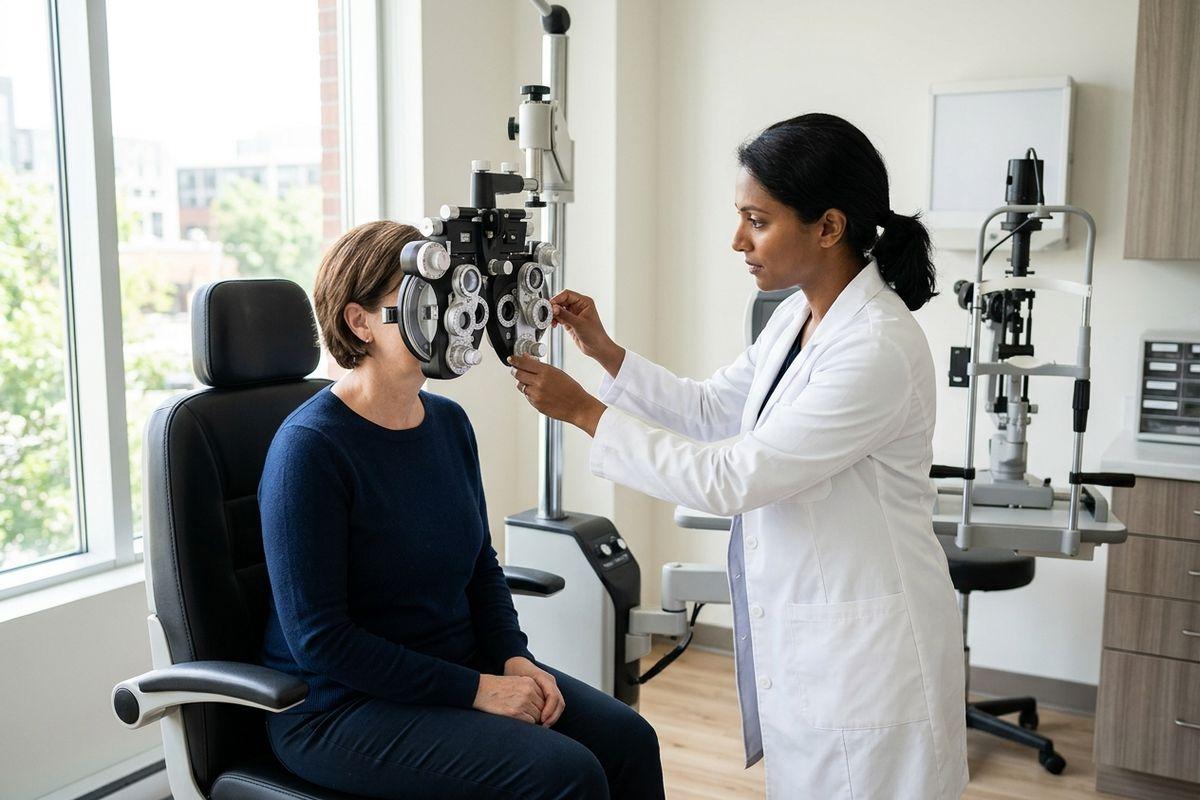
The only way to confirm myopia and get the right prescription is through a comprehensive eye exam. Your eye doctor will not only test your vision but also check the overall health of your eyes. Regular check-ups are an important part of preventative health care for the whole family, and our team at Downtown Eye Care & The Contact Lens Department is here to help you. Book an appointment today.