

Glare has a way of cutting an afternoon outdoors short. Light bounces off the water, your eyes start watering, and squinting only buys you so much relief. Most people reach for a darker tint, though a standard pair of sunglasses dims the whole scene without doing much about the shine itself.
Polarized sunglasses use a built-in filter that blocks horizontal light, so glare bouncing off flat surfaces drops away and you get a clearer, more comfortable view. Knowing how it works can help you and your optometrist land on a lens that suits how you spend your time outside.
How Polarized Sunglasses Work
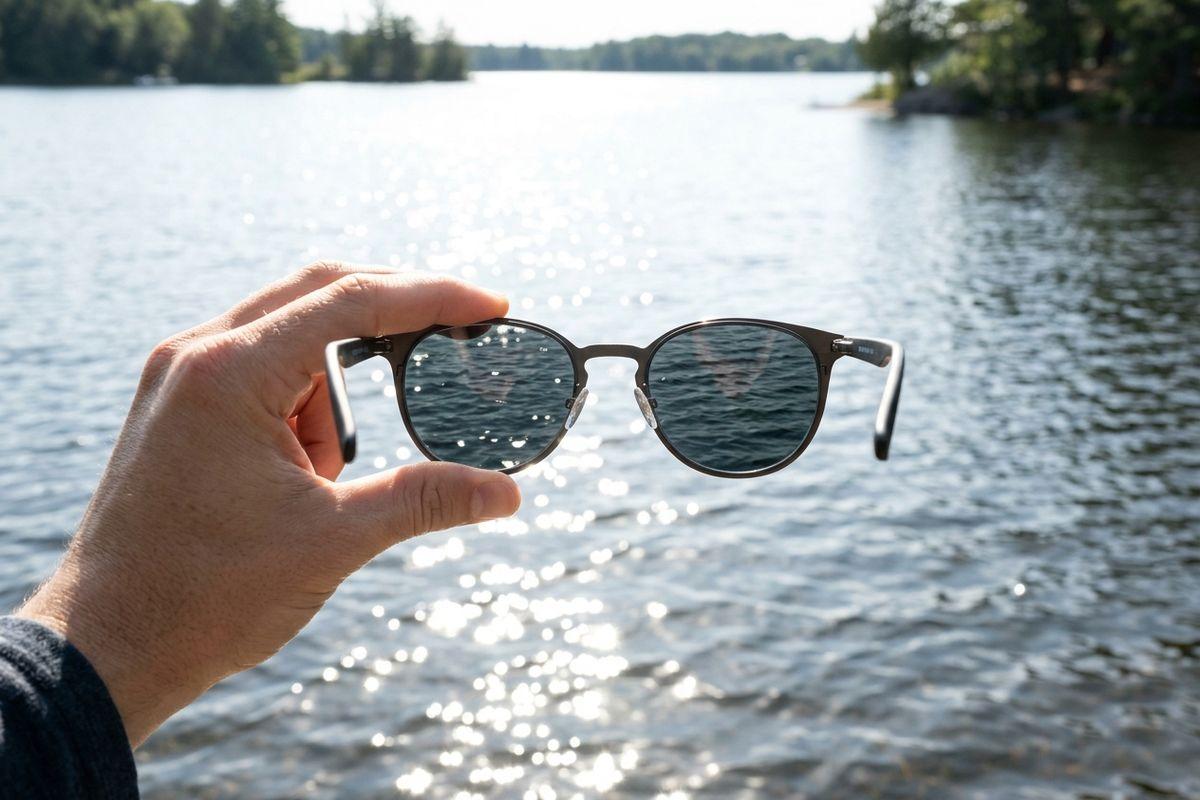
Light scatters in every direction as it travels. When it strikes something flat and smooth, like a highway or a lake, much of it bounces back in horizontal waves. That horizontal light is glare.
A polarized lens carries a chemical filter arranged like a set of vertical blinds, letting vertical light through while stopping the horizontal waves before they reach your eye.
What you get is a sharper image with far less shine. Colours hold their depth and edges stay defined instead of washing out into a bright haze.
Where Glare Comes From and Why It Matters
Glare needs 2 things: a smooth reflective surface and a decent amount of sun. Once those line up, your eyes take a concentrated burst of light, and you start squinting to compensate.
A few spots where you’ll notice it most:
- Sunlight skipping across a lake or ocean
- Fresh snow on a winter trail
- Wet or sun-baked pavement
- The hood of the car ahead of you
- Glass storefronts along a busy street
Squint for a few hours and your eyes may feel it by dinnertime. Bringing that light down keeps you comfortable for longer stretches outside.
Benefits of Polarized Lenses for Your Eyes
Comfort is usually the first thing people notice. With less harsh light coming in, the muscles around your eyes don’t have to work as hard, which can mean less fatigue at the end of a long day.
Detail improves, too. Contrast sharpens, so you can pick out a fish holding under the surface or a golf ball sitting in the rough.
Drivers tend to notice it on wet pavement, where reflected light can flatten out lane markings and brake lights.
When to Wear Them
Polarized lenses earn their keep anywhere sunlight is bouncing back at you off water or pavement. Pull them out for:
- Fishing and boating
- Beach days
- Golf
- Daytime driving
- Hiking in open, sunny terrain
Plenty of athletes wear polarized sunglasses over contacts, and the contact lenses you pick for sport affect how comfortable that pairing feels over a few hours.
When to Leave Them in the Case
The same filter that removes glare can hide things you’d rather see. Swap to a different lens in these situations:
- LCD screens like dashboards, phones, and gas pumps can look dim or go black at certain angles
- Icy patches lose their telltale shine, which matters if you ski and count on spotting ice ahead
- Night driving already limits how much light reaches your eyes, and a polarized lens takes away more
Keep a non-polarized pair in the car or the gear bag for those moments.
How to Tell If a Pair Is Polarized
Store labels aren’t always clear, so test the lenses yourself. Hold them up to an LCD screen and rotate them roughly 90 degrees. A polarized lens darkens noticeably as it turns.
You can try the same thing outside. Look at the reflection on a car hood through one lens and tilt your head slowly. If the shine fades and comes back, the filter is doing its job.
Polarized Doesn’t Mean UV Protected
Just because your sunglasses have a dark tint doesn’t mean they’re protecting your eyes completely. Polarization deals with glare, while ultraviolet protection comes from the lens material or a separate coating. UV rays can damage your eyes over time, so buy a pair that covers both. Check the label for 100% UVA and UVB protection before you pay.
If the tag doesn’t spell it out, ask. An optometrist in Ottawa can read the specifications with you and match a lens to your routine.
Trade the Glare for a Clear View
The right pair depends on where you spend your afternoons and what you’re trying to see. Bring your questions to your next appointment, try a few frames on, and compare how each one handles the light.
The team at Downtown Eye Care will walk you through your options and confirm that your lenses fit both your prescription and your day. Book your visit today.